

Paw-Biting & Tail-Chasing Puppy? (Mystery Solved: 7 Strategies)
What causes a puppy to chew its own body?
Is it like you chewing your nails?
Or is there another underlying cause for a puppy to chew its paws or chomp on its tail?
Licking and Chewing Paws
Your puppy will clean its paws to remove dirt and grit; paw licking and chewing is normal behavior.
Excessive paw chewing has an underlying cause typically:
- Injury.
- Skin condition.
- Behavioral.
- Infection.
Injury
Sudden onset of licking and chewing one paw may indicate an injury.
Your puppy may have a broken nail, a thorn, a cut, ice between its toes, insect bite, or sore feet from walking on hot pavements or icy surfaces.
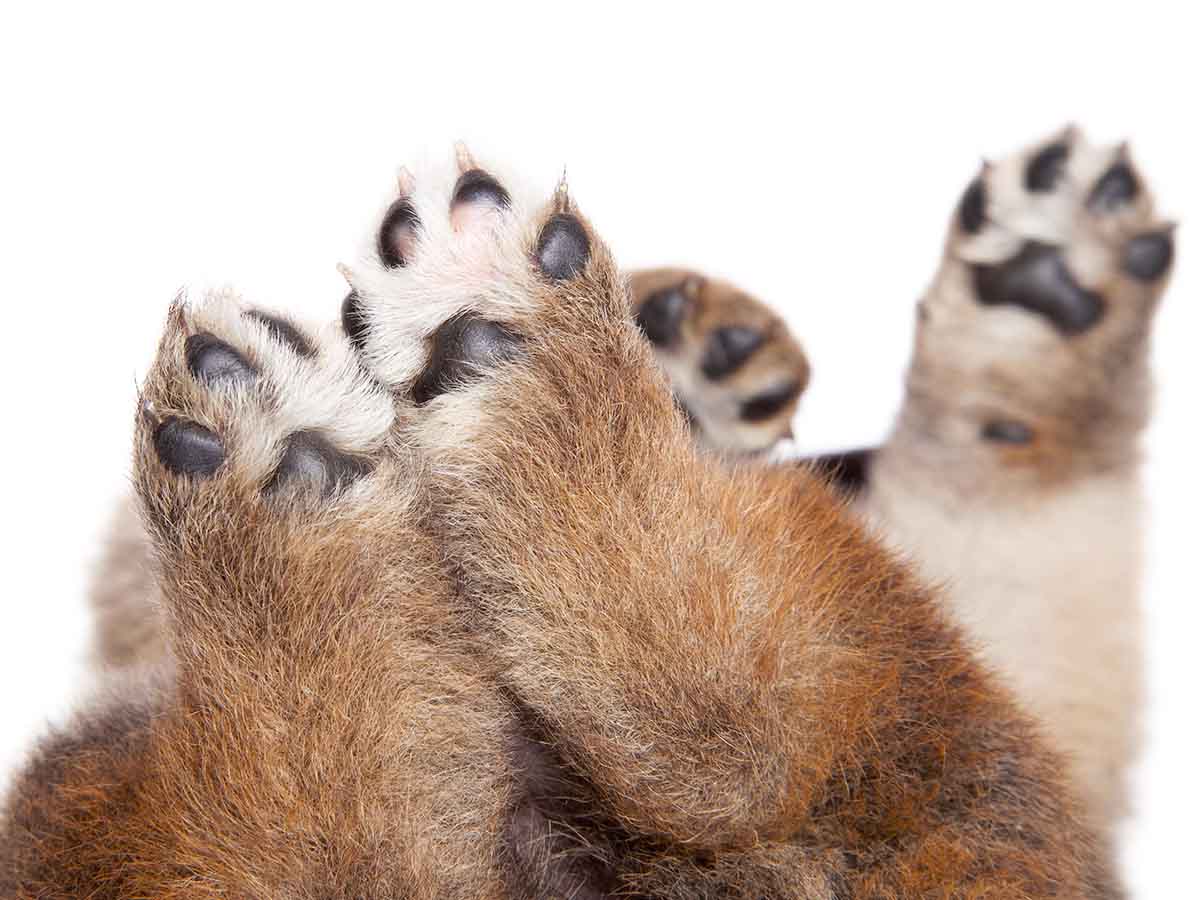
Check the paw by examining the pads, between the toes, the nails, and the top of the foot.
There may be an apparent injury requiring attention by you or your vet.
An antibiotic spray or ointment on standby is helpful for home treatment of allergies, rashes, itchy skin, and cuts.
Skin Condition
Dermatitis is an inflammation or irritation of the skin.
Your puppy may be allergic to grass, yard cleaning chemicals, something in your house, or have a food sensitivity.
Plus, a parasite infection like fleas may give your puppy super itchy paws.
Your vet can help identify any underlying allergic reactions and give treatment for fleas and mange.
Behavioral Issues
Your puppy may chew its paws because it is bored, anxious, or is a compulsive paw chewer.
You can help by ensuring that your puppy gets enough exercise with regular play and training sessions.
Plus, providing a range of puzzles and chew toys and treats may help distract attention from chewing its paws and onto chewing a toy.
If you think your puppy is anxious or fearful, you can provide a calm atmosphere using a puppy playlist, calming medication, and soothing scents.
You can work on desensitizing your puppy from obvious fears like separation anxiety, and as your puppy’s anxiety levels decrease, it will spend less time chewing its paws.
Compulsive behavior develops in some puppies where the puppy chews its paws obsessively at every spare moment.
Although compulsive behavior is relatively rare, you will want to work with your vet (to rule out other illnesses) and a behaviorist to eliminate the issue if your puppy is damaging its paws with excessive chewing.
Infection and Illness
Your puppy may have an infection elsewhere and chew its paws in response.
This behavior is similar to referred pain when you have an issue in your back and feel an ache in your knee.
The puppy can’t reach the source of the irritation, so it chews its paws to try and feel better.
Excess paw chewing may allow a secondary infection (yeast and bacteria) to develop, causing the puppy to chew more.
Your vet can prescribe appropriate medication to treat any additional infections and diagnose the underlying cause.
What About Tail Biting and Chewing?
Your puppy may chase its tail and catch hold of it as a playful exploration of the world. Not every puppy chases its tail, but many do.
It is as if the puppy isn’t aware the tail belongs to it until it manages to get hold of the tail.
Play chasing is infrequent and lasts a few minutes.
If your puppy seems obsessed with biting and chewing its tail, then there may be an underlying cause.
Injury
Your puppy’s tail can get cut, bitten, or damaged, and this may cause irritation.
If your puppy is tail chewing, it is worth checking to see your puppy has an insect bite, cut, or irritated skin on the tail or hind end.
Some injuries you can treat at home, but some may require vet attention.
Parasites
Fleas and worms can all cause an itchy rear end.
All vets recommend regular parasite treatments, and most offer a yearly plan to pick up medicine for tapeworm, roundworm, mange, ticks, and fleas regularly.
Habit
If you react when your puppy chases its tail, then you may reinforce the behavior as a fun thing to gain attention.
Your puppy isn’t bothered by negative or positive attention, and tail chewing can become an attention-seeking habit.
Do All Puppies Chew Their Paws and Tails?
As part of your puppy’s self-grooming, it will clean its paws, and your puppy may chase its tail.
You can expect a certain amount of this behavior as a regular part of puppy life.
If your puppy is chewing its paws or tail obsessively, there is a potential issue, and this obsessive behavior tends to indicate an underlying cause that may need treatment.
Your puppy’s paws are in direct contact with the ground and prone to injury or irritation. Imagine what sort of injuries you will pick up if you walk barefoot along the sidewalk or in the park.
During winter, the rock salt for preventing ice is harsh and abrasive on your puppy’s feet, and during the summer, the hard surfaces or a sandy beach can burn the sensitive pads.
You can tell if a hard surface or beach sand is too hot for your puppy if it is too hot for your feet or the back of your hands.
If the air temperature exceeds 77F (25C), it is too hot to take your puppy for a walk. Ideally, only walk your puppy when the temperature is below 66F (20C) to avoid dehydration and heatstroke.
Strategies to Avoid Excessive Paw and Tail Chewing
Prevention is easier than dealing with a habitual paw chewer.
There are some common approaches to prevention or diminishing your puppy’s excess attention to paws and tails.
1. Clean Paws After a Walk
When you come in from a walk, get your puppy familiar with the process of cleaning its paws.
After a wet walk drying paws and checking for injury and dirt or ice between the toes will help keep your home clean and your puppy in excellent condition.
You can dry a small puppy’s paws with a face cloth but cutting down larger towels and dishcloths, so you have a stack of ready-to-use drying cloths by the door makes it straightforward to clean your puppy’s paws.
It is worth using a cloth to brush off dust and debris and check for grit or insect bites, even on dry days.
Wash your drying cloths regularly because you want to avoid a build-up of dust and potentially fungal or bacterial infections.
If your puppy has an infected paw, use a different cloth to clean and dry that paw to prevent the spread of infection.
2. Daily Grooming
Your puppy may not need a daily brush, but the habit of daily grooming lets you give your puppy a check for any issues.
Your puppy becomes happy with handling (makes it easier to visit the vet), and you can check for potential injuries or other problems before they become significant.
During the daily grooming session, check paws, tail, nose, ears, and eyes.
Look for cuts, bites, broken nails, irritated skin, sore patches, and potential infections.
3. Regular Parasite Treatment
Talk to your vet about the frequency of preventative worm, flea, and tick treatment, as well as vaccinations.
Keeping your puppy parasite-free keeps your puppy and your family healthier.
The most frequent cause of an itchy tail is down to worms and fleas.
4. Be Alert for Allergies
Your puppy may be allergic to something in its environment or its diet.
The reaction is likely to start at the place where the allergen contacts the body, but whole-body reactions are not uncommon.
Vets are increasingly diagnosing allergic reactions in puppies due to a mixture of more awareness and increased allergic responses to environmental and dietary factors.
Fortunately, diagnosis is increasingly straightforward, and there are plenty of treatments from avoiding the allergen to topical itch creams and medication.
Along with itchy or swollen paws, your puppy may sneeze, catch plenty of ear and eye infections and have diarrhea.
If your puppy is chewing or licking its paws and there is no apparent injury, it is worth chatting with the vet.
5. Keep a Puppy Journal
A daily log of your puppy’s diet, exercise sessions, and behavior is an excellent resource for identifying potential issues with allergies and behavior.
Plus, you get a record of your puppy’s early months.
If you notice that your puppy always has diarrhea after a specific walk, there may be a link with something in that area.
If you think your puppy is bored or anxious, your puppy journal helps you assess if the action you take is helping to give you the right results.
Writing notes on diet and other behavior changes will help evaluate a potential pattern resulting in excessive paw chewing.
6. Healthy Body and Mind
Your puppy needs exercise and mental stimulation to prevent boredom or anxiety chewing.
A routine of walks, play, and training sessions indoors and out ensures that you meet your puppy’s needs.
You can encourage your puppy to play without your involvement when left alone with appropriate puzzle toys like snuffle mats.
You can keep your puppy alert and interested by restricting access to high-value toys and rotating through them for variety.
7. Set Up a Puppy First Aid Box
It makes sense to maintain a puppy-specific first aid box so you can treat minor injuries quickly and stabilize your puppy before seeking vet attention.
It is best to keep your first aid box and the puppy’s separate to avoid cross-contamination, and human products may not be suitable for your puppy.
You can consult your vet, buy a first aid kit or buy individual components for a DIY puppy first aid kit.
A helpful puppy first aid kit includes:
- Medical paperwork and vet contact details.
- Hydrogen peroxide – excellent cleaner and has other uses.
- Antibiotic ointment – dog-specific.
- Gauze bandages, tape, gloves, and scissors.
- Puppy wet wipes.
Conclusion
Your puppy will become excessively interested in chewing its paws or biting its tail at some stage. Probably because of a minor injury or insect bite.
If you know what to look for, you can tell the difference between grooming and play and when you need to investigate.
Like you and your family, your puppy is likely to pick up small scrapes and minor injuries, but it doesn’t have to be a crisis.
Your puppy often simply needs a thorn removal or a paw wash – be alert and be prepared.