

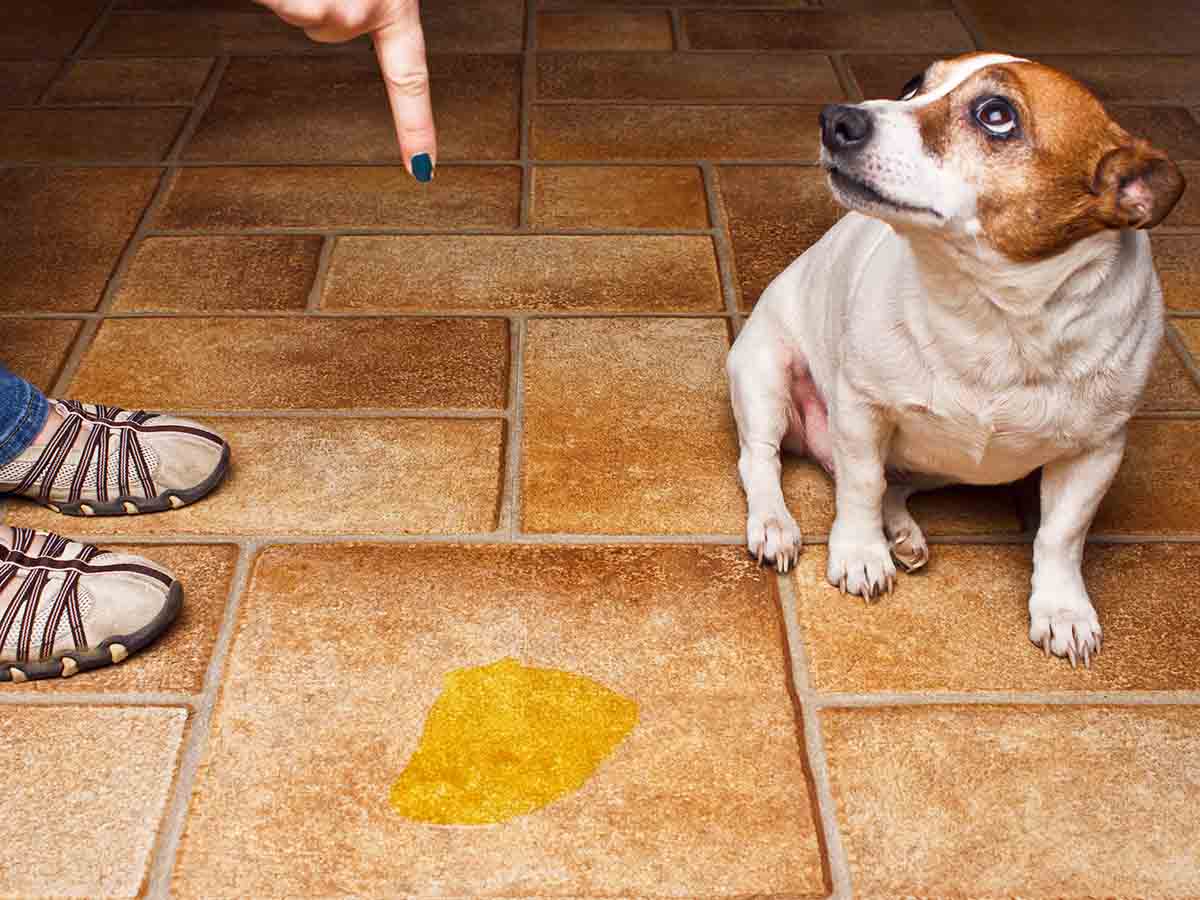
Yelling at a Puppy (Crucial Facts +7 Helpful Tips)
Puppies are cute and full of mischief.
You come home and find your puppy in the middle of a heap of chewed shoes.
Your distress gets the better of you, and you yell at your puppy. Your puppy runs and hides or falls to the floor a heap of abject misery.
What does yelling at your puppy achieve?
Why Do You Yell?
Shouting and yelling is a response to intense emotions of:
- Fear – your puppy is running towards the road, and you yell stop.
- Excitement – a loud squeal when you see a friend.
- Anger – excess adrenalin can promote a louder voice as an automatic threat display.
Plus, you may shout to attract attention in a noisy environment or be heard by someone hard of hearing.
The raised voice is less of an issue for your puppy than the emotion behind it. Yelling to relieve anger isn’t helpful to you or your puppy.
Avoid Yelling at Your Puppy in Anger
There is a world of difference between shouting a command in a loud voice and yelling out of control nonsense berating your puppy for being a bad dog.
Timing Is Everything
Your puppy does not remember actions and project future consequences the way you can and do.
If your puppy is left alone and your shoes are in reach, it may chew them to pieces. After the event, your puppy cannot understand that you are yelling because it chewed your shoes.
From your puppy’s viewpoint, you came into the room and shouted for no reason.
If you are in the room and your puppy picks up your shoes, a sharp (and loud) command of “no” or “drop” will create and reinforce the message that picking up the shoe is not acceptable.
It will take time to learn the message, and you may need to get up and gently but firmly remove the shoe from your puppy’s jaws while repeating the command.
Your yelling at your puppy after the event changes nothing and upsets your puppy.
Urgent Commands
Training your puppy to respond to an urgent shouted command is essential for its safety and your ability to control your dog in public spaces.
Two necessary instructions for your puppy are the ‘stop’ and ‘recall’:
- The ‘stop’ command (you may choose a different word) is essential to stop your puppy from running into a busy road, chasing the neighbor’s cat, or jumping up at people without permission.
- The ‘recall’ command brings your puppy back to you, and if your puppy is far away, you may need to yell so your puppy hears you.
Yelling an urgent command is yelling with a purpose, and your puppy will understand the need to obey the shouted words.
You may feel angry or frightened with or for your puppy while yelling, but the emotion is proportional to what you need your puppy to do and isn’t harmful.
Managing Expectations
Everyone carries and responds to different levels of stress and frustration with varying degrees of angry reactions.
You create your puppy’s environment, so whatever your puppy gets into, wrecks, or destroys is your responsibility.
Suppose you ensure that your puppy’s bathroom accidents (inevitable) are straightforward to clean up, and your puppy can’t access precious items or other unsuitable objects for chewing.
In that case, there are fewer triggers for your anger or disappointment.
If you have a stressful day at work and want to yell to release your frustration, try and channel that angry energy into something more productive – whatever activity works to destress you – jogging, cooking, or taking your puppy for a walk.
7 Tips to Avoid Yelling at Your Puppy
Life is full of frustration; you trip over a squeaky bone, your puppy pees on your foot or nips a little too hard while playing.
Shouting may be an instinctive reaction, but an angry loss of control damages you and your puppy.
If you shout at your puppy and display aggression, you become a potential threat. In some breeds, the response as the puppy matures may be aggressive.
In the same way, a child subject to yelling in its development becomes an angry, yelling adult.
If you want your puppy to develop into a calm, loving canine companion, you must model the correct behavior.
When you understand that your puppy doesn’t intentionally create mayhem or destroy your possessions, it is easier to accept responsibility for training your puppy to behave differently.
Top tips for managing your puppy include:
- The puppy’s control over pooping and peeing takes time to establish. Prepare for the mess by restricting access for the puppy to areas that are straightforward to clean. Keep a ready-to-use cleaning kit on hand to deal with all accidents.
- Puppies chew everything – you control your puppy’s access to your possessions, so put anything you don’t want chewed out of reach and provide plenty of appropriate toys.
- A bored puppy is a destructive puppy – schedule active playtimes to ensure your puppy is tired when left alone.
- Learning takes time – schedule regular, short training sessions and focus on learning essential commands patiently with rewards and not unproductive threats.
- Puppies pick up on your emotions – be in a good mental space when you interact with your puppy, not while being angry at your kids or boss.
- Be consistent – it may be funny when your puppy chews an old slipper, but if you don’t want to establish a shoe chewing habit, be firm in removing the unsuitable object.
- Be kind – your puppy doesn’t understand your words, only your actions, and your emotions. How you interact with your puppy determines how it feels about you and life in general.
By controlling your puppy’s environment with the appropriate use of crates, playpens, and prepared rooms, you minimize the potential damage your puppy can do to itself and your possessions.
By spending time with your puppy in training it to behave appropriately, you teach your puppy acceptable behavior.
Both these approaches minimize the circumstances in which your puppy can trigger your anger response. But part of the equation is that you need to manage your angry reactions to your puppy’s mishaps.
When the Shouting Is Over
What do you do when your temper gets the better of you, and you’ve just exploded with rage and angry yelling?
If your puppy were human, you could apologize and explain why it was wrong for you to lose your temper.
That option isn’t available for your puppy because it doesn’t have the vocabulary or the reasoning skills to comprehend your words.
Your puppy’s response to your shouting will either be fear and flight or fear and anger.
Puppy Runs and Hides
If your puppy runs away from your angry yelling and hides in its safe space (bed, crate, or under the furniture), don’t follow it.
You may want to pull the puppy into your arms and cuddle it to let it know you’ve stopped being angry, but your puppy needs to know that its safe space is secure.
Calm down, and after a few minutes, tempt your puppy to come out and play with treats or a new toy.
Your puppy won’t hold a grudge, and when the yelling stops, your puppy will forget and move on.
Your puppy will remember the angry words, and the way you act and smell when mad is frightening, but it won’t dwell on a single incident.
Puppy Growls or Barks
Your puppy is still displaying fear at the threat of your angry behavior.
Stop yelling and ignore your puppy’s display while you calm down.
Do not approach your puppy while it is trying to defend itself from the threat (you) because you may provoke the puppy into biting to defend itself, which is a behavior you don’t want to establish.
If you can, sit down in the same room and talk calmly.
It doesn’t matter what you say; it’s your body language, tone, and scent that will reassure your frightened puppy – recite a poem, sing a song or tell your puppy that you didn’t mean to frighten it.
As you calm down and the puppy sees no threat, it will relax its defensive posture.
Allow the puppy to approach you and reassure the puppy with gentle words and touches.
Summary
Avoid expressing your frustration through yelling – it sends toxic chemicals through your bloodstream and promotes unhappiness in those around you.
Flying off the handle may indicate that you have underlying stresses in your life that you need to resolve that have nothing to do with the puppy.
But your puppy may be part of the solution – instead of responding with anger to your puppy’s actions while you were absent, focus on a joyful reunion.
Deal with the mess after you’ve cuddled, walked, and played with your pup. Interacting positively with your puppy will lower your blood pressure and elevate your mood.
If you find yourself yelling at your puppy every day, you may need to consider if you need to rehome your puppy because the relationship isn’t working.
The occasional episode isn’t going to harm your puppy, but daily doses of fear and anxiety will not result in a happy dog or a happy you.