

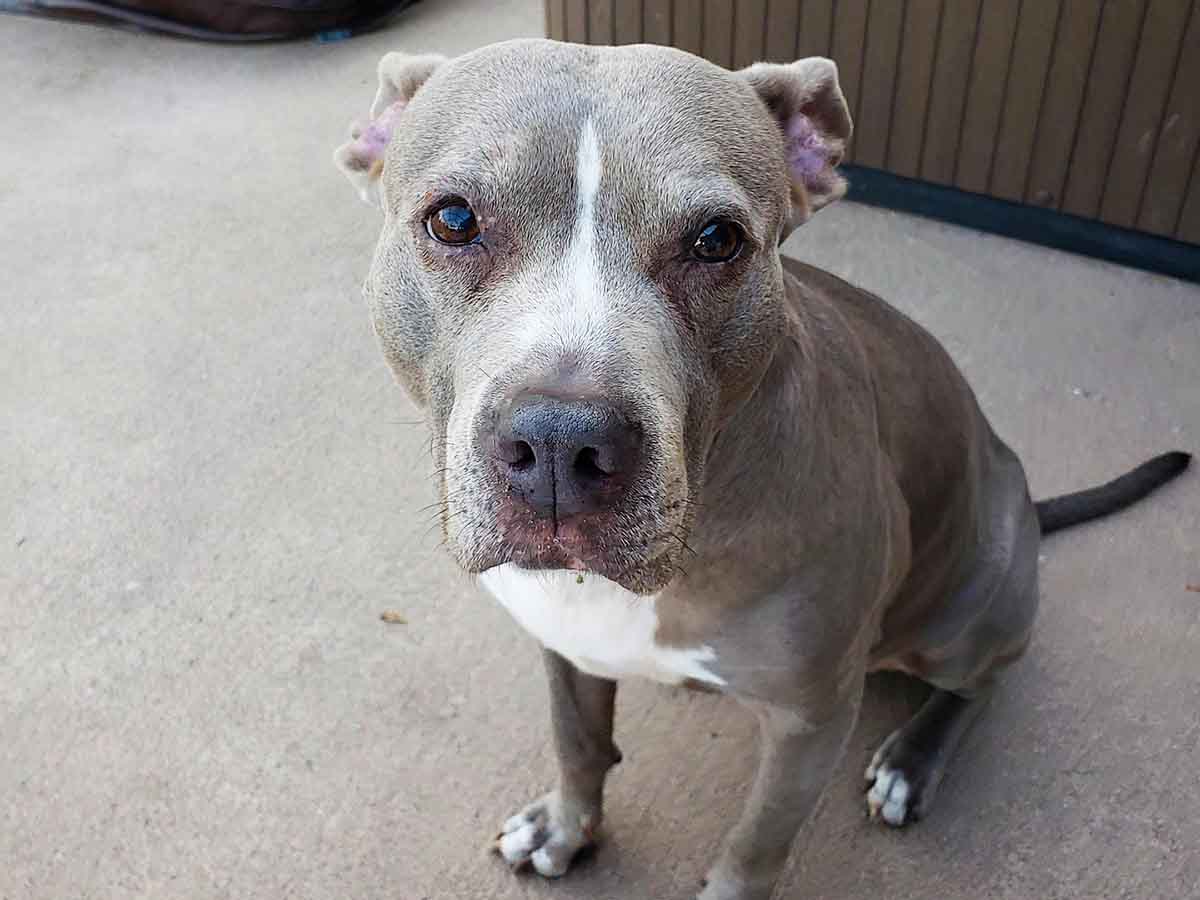
Scared Puppy: 17 Fears (+Why So) Owners Should Know
Puppies like kids feel fear of the new, the startling, and the potential hazard.
Some fear is instinctive to protect from harm, and others are reactions to experience.
Why Do Puppies Feel Fear?
Nature equips your puppy with a fear response to give it a chance of growing into adulthood.
The extent of your puppy’s fear response depends on:
- Personality – shy or anxious puppies may have an enhanced fear reaction.
- Breed – some puppies are more likely to develop phobias than others.
- Negative experiences – reinforce the fear creating a potentially harmful habitual response.
A phobia is an excessive and consistent fear response to a situation that is not immediately harmful.
Large breed dogs are prone to developing a phobia about loud noises – fireworks, thunderstorms, and gunshots, for example.
While the underlying basis for fear has some helpful elements, the reaction is a dog that shakes and trembles excessively even when safely inside your home.
The typical causes of fear fall into common areas:
- Fear of being alone – separation anxiety.
- Noises.
- Strangers – dogs, people, and other animals.
How Does a Puppy Show Fear?
Puppies can show their fearfulness in different ways:
- Pacing and an inability to settle.
- Panting, shaking, and trembling.
- Running and hiding.
- Drooling, refusing treats, and piddling.
- Rolling over and whining.
Some puppies display their fear through aggression – barking and growling at the object or cause of their fear.
How Can You Help Your Puppy with Fear?
Your puppy’s fear can arise from:
- Lack of experience – the first time it has seen, heard, or met this object or event.
- Bad experience.
- Instinct.
Regardless of the fear trigger, the approach for your puppy is the same:
- Don’t make a fuss and remain calm – your instinct is to reassure your puppy but drawing attention to the fear may reinforce it.
- Desensitize by controlled exposure.
- Distract by engaging in fun activities.
- Provide a safe place to retreat.
Calming music may help your puppy with some fearful situations, but only if you take the time to create a positive association with that music.
You do this by using the music you want to act as a calming influence as background noise when the puppy has fun and is calm. Once you’ve built this association, playing the music triggers feelings of calm.
What are Common Triggers for Puppy Fear?
Anything can promote fear in your puppy, but most common fears revolve around:
1. Stormy Weather
Thunder, lightning, rain, hail, and high winds can all or in part reduce your confident puppy into a trembling, terrified wreck hiding under the furniture or howling for hours.
Large breeds like the Siberian Husky or Labrador Retriever can develop and maintain a phobia about storms.
Perhaps somewhere in the racial memory, there is an intuitive awareness of the risk of storms to a wolf pack; who knows?
The technical name for fear of thunder is astraphobia, and some humans share this phobia.
Your puppy can hear the low vibrations of thunder long before you can, plus the puppy senses the change in air pressure. Your puppy can start to be afraid of the storm long before you realize the storm is coming your way.
You can help your puppy deal with their fear in stormy weather by:
- Remaining calm – your puppy will react to your anxiety, reinforcing the idea that there is something to be afraid of in the stormy weather.
- Providing a safe cave to hide in – don’t lock your puppy in a dog crate; your puppy needs an escape route, but do use heavy blankets to dull the sound.
- Distraction – put on the TV, play loud music, and indulge in your puppy’s favorite game with treats.
- Desensitize – get hold of a storm soundtrack and play at a low level while your puppy has fun playing.
- Stress vest – an item of clothing that reduces anxiety by providing a physical “hug.”
- DAP (Dog Adaptive Pheromone) – can help promote calmness with a plug-in or spray.
When your puppy has their check-up, you can chat to your vet about your puppy’s fear response to storms for more support if necessary.
2. Fireworks
Fireworks induce fear in many puppies, and this fear can last a lifetime.
Fireworks are loud and sudden. Your puppy doesn’t understand why the world has exploded, and you can’t explain why it is happening.
When you have your first puppy check-in with a vet, ask about measures to keep your puppy calm during upcoming fireworks events.
Otherwise, adopt the same approach as for storms by providing a secure refuge, opportunities for distraction, and remaining calm.
3. Wind Sensitivity
Wind can create a range of noises – wind chimes, rattling windows, howling through the treetops, and knocking over the trash cans.
It is not surprising that your puppy might find wind a terrifying experience.
The same approach to helping your puppy deal with a storm phobia works to reduce fear in a puppy with wind sensitivity.
4. Loud Noises
When somebody drops a glass in a restaurant, or you hear a car backfire, most people jump at the noise. The startle reflex is automatic.
The issue for dog owners is when the startle reflex to loud noises generates an extreme fear response.
You can prevent future problems with a fear of loud noises by giving your puppy a positive experience of the world of noise.
Careful exposure to household noises and using a soundtrack of scary noises developed for puppy training means you can build your puppy’s awareness of sound positively.
You start by playing the “scary” noise at a low level (below your hearing range) while your puppy is happily playing.
You increase the volume (without scaring your puppy) until your puppy understands that these noises are a part of the world and nothing to promote fear.
If you include sound training as part of your puppy’s formative experiences, you are less likely to have problematic fear responses to loud noises in your adult dog.
5. Scary Darkness
Puppies see better in the dark than humans, but your puppy can still develop a fear of darkness.
Principle causes of fear of darkness are:
- Separation anxiety – the puppy isn’t afraid of darkness so much as the fact that it gets left alone when the lights go out.
- Vision issues – most puppies don’t have vision problems, but darkness can make an underlying issue worse if your puppy keeps bumping into things. Your vet will identify if your puppy has vision issues.
- Trauma – you switch the lights out, and your puppy knocks over an object that falls with an enormous crash. The fright creates a link in the puppy’s mind with darkness and loud crashes resulting in fear of the dark.
You can help your puppy by:
- Leaving on a night light – works for kids and puppies.
- Dealing with separation anxiety through training.
- Scheduling fun playtime in the dark to replace the fear reaction.
- Sitting quietly and calmly in the dark with your puppy until it relaxes.
- Using DAP or soft music to promote calmness.
6. Sleeping Alone
Your puppy’s first experiences are social – mum and siblings. At the same time, it loses its pack, and you expect it to sleep alone.
When a puppy is too young to sleep through the night, it won’t cope well with being left unattended overnight.
Separation anxiety can increase to the point your puppy exhibits fear at the prospect of sleeping alone and howls all night or guilts you into letting it on your bed to sleep.
The best way to approach removing this fear is to gradually acclimatize your young pup into sleeping happily through the night in a different room.
7. Fear of Heights
If your puppy has a traumatic fall, it may develop a fear of high places, or the fear may be instinctive.
The technical name acrophobia covers fear of heights in humans and dogs.
Puppies have limited depth perception, and although a puppy can have a fear of heights, it is more likely that your puppy is showing fear of a particular obstacle like stairs or a bridge.
When you train your puppy to cope with challenging high obstacles, you will probably find that the fear of heights no longer exists.
8. Fear of Stairs
Your puppy may fear going up and down stairs because:
- Lack of experience – your puppy hasn’t encountered stairs before or not ones like these.
- Trauma – if your puppy trips on your stairs and slides down with a bruise, it is unlikely to look on stairs as fun places to walk up.
- Training – if you stop your puppy from going upstairs in your house, it may not realize that it is alright to climb stairs anywhere else.
- Pain – if it hurts to climb the stairs, your puppy will avoid the experience.
- Noises – concrete and metal stairs may produce weird noises that upset your puppy’s sensitive hearing.
- Slip hazard – polished wooden steps may discourage your pup from walking on them.
- Insecurity – open stairs with gaps may make your puppy feel it is climbing too high or doing something dangerous.
When your puppy is small, carrying it up and down stairs may be a viable option, but as it grows, you may not cope with carrying your heavy dog up and down stairs.
The best way to overcome your puppy’s fear of stairs is to encourage and reward it for surmounting this obstacle.
Start with little steps – encourage your puppy to climb one step and praise and reward it.
Tomorrow work on two steps until your puppy can climb those stairs.
When you start taking your puppy for walks, seek out routes with steps and work with your puppy on conquering those stairs.
You may have to spend some time sitting patiently while your puppy recovers its sense of adventure and works out that it can go up and down stairs.
If your puppy is from one of the smaller breeds, it may not be physically possible for your puppy to navigate stairs safely. In that case, you need to wait until your puppy grows before starting stairs training, but at home, you can create little steps for practice play.
9. Fear of Other Dogs
From a puppy’s point of view, other dogs are scary – especially big dogs who may view your cute little puppy as lunch rather than a member of the same species.
The best place for your puppy to enjoy the company of other dogs is in a puppy class for socialization.
Please don’t assume that other dogs will welcome your puppy or treat it well when walking your puppy outside. Your bold pup may go up to another dog and get a severe fright or bite that traumatizes it against future encounters.
Never assume that a dog off the leash is automatically friendly. Some dogs will not seek out other dogs but will respond aggressively if another dog approaches them.
Your puppy hasn’t the experience to know which dogs are giving keep-away vibes.
Always seek confirmation from the other owner that their dog is friendly towards other dogs before allowing your puppy to approach that dog.
Don’t allow your puppy to bounce up to a dog on a leash without clearance from the owner. The dog may be friendly off the leash but aggressive (or fearful) when leashed.
If you ensure that your puppy’s early experience with other dogs is positive, it is less likely to develop a fear of other dogs.
10. Fear of Cats
Surely, dogs chase cats?
Is it possible for your puppy to fear cats?
A cat is a top predator, and unlike your puppy, it has lethal weapons on the end of its paws. If you bring a puppy into a home with a resident cat, the cat will likely assert dominance and enjoy terrifying your puppy.
Outside, a puppy that bounces up to make friends with a neighborhood cat is likely to be met with a frightening creature that arches its back, hisses, and swipes a painful cut across the puppy’s nose with its claws.
If your puppy is from a toy breed, your puppy is a small meaty animal to a cat and a potential meal.
Your puppy has good reasons to fear cats.
You can socialize your cat and puppy, but never allow unsupervised access until your cat and puppy establish a reasonably happy relationship – one where the puppy doesn’t treat the cat as a play object, and the cat doesn’t stalk and ambush the puppy.
If a cat bites or claws your puppy, take the puppy to your vet because there is a high risk of infection.
The best way to prevent a fear of cats is to protect your puppy from unpleasant cat encounters.
11. Humans and Other Strangers
Some puppies fear people they don’t know but meet when they visit the house or out on a walk.
Your puppy may be fearful because:
- Genetics – anxious dogs give birth to nervous puppies preprogrammed to be timid around strangers.
- Lack of social skills – a puppy who doesn’t interact with people doesn’t know how to respond to friendly overtures.
- Trauma – someone may have aimed a kick at your puppy or otherwise mistreated it, giving it fear of strangers.
- Bad vibes – it is sensible for your puppy to trust its instincts when it comes to some strangers.
The answer to tackling your puppy’s fear of people is to build confidence in encounters with friendly people both at home and outside.
Enlist your friends to visit, and don’t force the interaction. Arm your friends with treats and toys and wait for your puppy to approach them.
Your puppy learns about the world through experiences, and promoting friendly, unforced meetings with other humans builds confidence that people are fun and nothing to fear.
12. Leashes
It is not natural for a puppy to have something tied around its neck and pulled in a direction it doesn’t want to go – hence the fear or aversion to the leash coming out.
Persuading your puppy to accept a collar and leash is an essential part of your puppy training regime.
There is a whole range of training strategies for getting your puppy to accept a leash and enjoy going for a walk. The essential part is to work up to leash acceptance with treats for rewards and good behavior.
If you try shouting or forcing your puppy to go on the leash, you will reinforce the fear response that isn’t helpful for you or your puppy.
13. Vacuum Cleaners
Most puppies respond to a vacuum cleaner by running away and hiding or attacking the noisy machine with loud barks and scrabbling paws.
A puppy attacking your vacuum cleaner may make a hilarious video, but imagine ten to fifteen years of dog harassment while trying to clean your house.
Both responses come from fear, and while the puppy that runs and hides is less of an issue than the one attacking your vacuum cleaner, you still have a frightened puppy.
Your puppy’s fear comes from the usual causes:
- The noisy vacuum cleaner is a new and, so far, unpleasant experience.
- Your puppy has developed a fear of the vacuum cleaner – perhaps it was startled by the noise.
- You have a nervous puppy, and most things frighten it at first.
If your puppy “attacks” the vacuum cleaner but with a wagging tail and a play bow, then you may have a puppy with a triggered herding instinct. This puppy sees chasing the vacuum cleaner and pouncing on it as a wonderful game.
The most desirable outcome is that the puppy ignores the vacuum cleaner but does not shiver in fear.
You can socialize a timid puppy with your vacuum cleaner by first having the vacuum cleaner in the room and then gradually introducing the noise and cleaning action.
You can train your puppy not to attack the vacuum cleaner with treats.
The most straightforward approach to vacuuming with a puppy in the house is to move the puppy into a safe location while you concentrate on cleaning your home. Your puppy shouldn’t be tripping you up while you focus on your chores.
Time in a puppy playpen means you don’t worry about your puppy and gives your new pup exposure to standard household noises.
If your puppy’s fear is excessive, then consult a behaviorist for help in reducing your puppy’s overall levels of anxiety.
The vacuum cleaner is probably not the only fear trigger in this case.
14. Bug Zappers
A bug zapper uses electricity to kill flying insects.
The insect’s death includes a “zzz” sound, and this irregular buzz as an insect meets its end can startle your puppy. Other bug zappers use a high-frequency sound that you can’t hear but your puppy can.
Your puppy running away with its tail tucked between its legs indicates that it isn’t happy. Alternatively, it may pin its ears back and press close to you and maybe whine a little.
If the bug zapper distresses your puppy, it is worth waiting a day or two to see if exposure to the noise desensitizes the puppy.
Unfortunately, if the distress continues, the only option is to replace the bug zapper with a less noisy pest repellent.
15. Balloons
Balloons are not puppy-friendly toys – they look fun, but as soon as the puppy bounces on them, they get frightened by a loud bang close to their sensitive ears.
Puppies and balloons don’t mix; not only is the noise disturbing there is the risk of choking if your puppy eats the deflated balloon.
16. Water
Some toy breeds refuse to splash through puddles or go out in the rain.
Hydrophobia or fear of water is a symptom of rabies, but you don’t need to worry if your puppy is happy to drink water but not step in it.
Most puppies will swim automatically but throwing your puppy into deep water may traumatize it even if it swims to the shore.
Your puppy’s early experiences with water will influence its fear level. You can encourage your puppy to enjoy water play by introducing it to games in shallow water in a paddling pool.
As your puppy matures and encounters streams and ponds, it may develop a disturbing fondness for plunging in and returning to you covered in mud and pondweed.
17. Car Rides
In your puppy’s short life, it has minimal experience of car rides. The first ride probably took it away from its litter and the second to the vet.
Increasing your puppy’s exposure to traveling by car may be sufficient to overcome a fear of car rides.
However, if your puppy exhibits fear accompanied by vomiting, it may be travel sick rather than afraid.
Consult your vet for appropriate travel remedies and treatment.
A puppy that barks excessively through nervous excitement while in the car may be calmed by traveling in a stress vest or playing calming music.
Finally
Your puppy is a new, unique individual, and it is bound to encounter things that scare it.
Most of these fears will dissipate when you remain calm, and the puppy builds positive experiences that show it that there is nothing to harm it.
Occasionally a puppy will develop an excessive fear response or phobia, and your vet is the best person to advise on strategies for reducing or eliminating this phobia so your puppy grows up to be a calm, confident adult dog.