

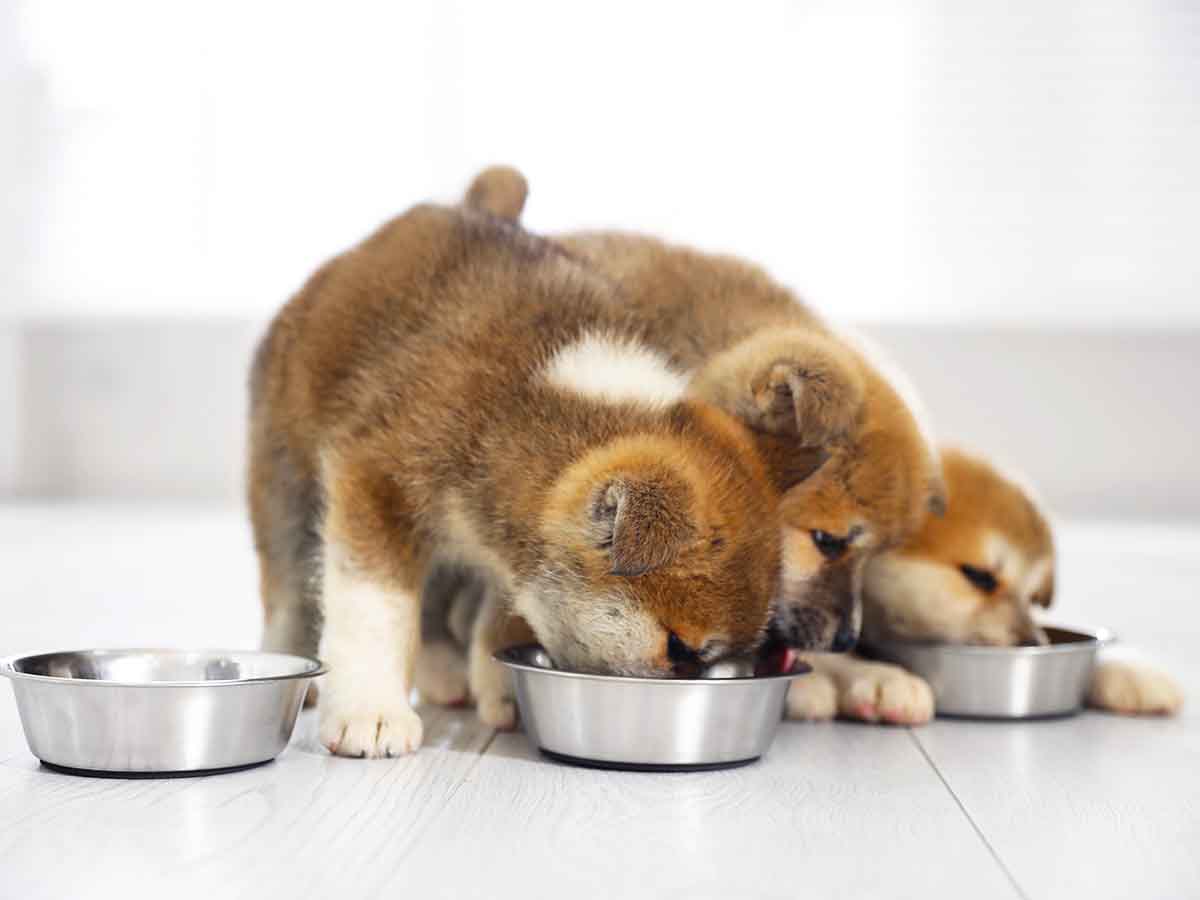
Puppy Foods: 32 Options Covered (What It Can & Cannot Eat)
The best diet for your puppy to grow into a robust, healthy dog is nutritionally balanced to provide the correct levels of protein, fats, carbohydrates, vitamins, and minerals.
Most owners play safe with a commercial range, and some adventurous types cook their own.
Which (if any) foods that you enjoy can you share with your puppy?
Should Puppies Only Eat Puppy Food?
Puppy food contains the balance of nutrients your puppy needs to develop and thrive.
Feeding an essential puppy food diet is the most straightforward way to ensure your puppy gets everything it needs nutritionally. But your puppy can eat and enjoy so much more, and some people cook meals for their puppy.
Alternatively, you can offer more tempting food items as occasional treats. And at the same time, using a base of preprepared nutritionally sound puppy food for regular meals.
If you choose to offer food to your puppy, it is essential to avoid potentially toxic foods. Not everything you can eat is safe for your puppy.
Does Your Puppy Breed Matter?
A Chihuahua and a Great Dane are still both dogs with identical digestive tracts.
The amount of food necessary to fill a Chihuahua puppy is different (markedly) to the Great Dane puppy, but their nutritional requirements are the same.
However, breed formulated food (small, medium, and large) accommodates different bite sizes and metabolisms, but it isn’t essential.
The breed does impact puppy feeding styles because:
- Large breeds and smaller chunky dogs need to grow steadily without overloading their developing bones, resulting in orthopedic issues. Consult your vet or breeder but aim to feed a less nutritionally dense food.
- Small breeds need access to food at all times because their stomachs are small, and they can get a blood sugar dip if they can’t refuel when necessary.
- Smaller puppies feel the impact of food sensitivities or toxins more than larger puppies.
- Choking hazard and risk of intestinal blockage decrease with the size of the puppy.
Puppies’ growth rate is phenomenal – twenty times the rate of an adult dog.
Puppies need nutritionally dense food spread across many small meals to avoid overloading their smaller stomach while still providing essential nutrition to fuel their growth.
What Type of Food Is Best for Puppies & When?
A newborn puppy initially gets everything it needs from its mother’s milk.
Around four weeks, a puppy gets most of what it needs from milk but needs a supplement of additional food.
By six weeks, most puppy’s transition onto independent feeding on solid food. It is best to offer moist food until eight weeks as this is easier for the puppy to eat and digest.
After eight weeks, you can provide drier foods but with plenty of water available.
You can start to move your puppy to two meals instead of four from around twelve weeks to six months.
To account for the slowing growth rate by six months, you need to adjust the amount and quantity of food you give your puppy (follow manufacturers’ guidelines).
Between six and eighteen months, your puppy is an adolescent. Moving your puppy from puppy food to adult food means changing the mix and reducing the quantity.
When your puppy starts to leave food, it is a sign that it is getting all it needs – although some puppies are greedy and will stuff themselves with no off switch.
If you have a puppy without an off-switch for eating (typical Labrador behavior), weigh the correct portion size for your puppy.
Transition your adolescent puppy slowly from puppy food to adult food by reducing the puppy mix quantity and replacing it with your preferred adult mix in combination.
Check your puppy’s weight against the manufacturer’s guidance for appropriate food quantities.
It is not an exact science – if your puppy seems hungry, feed a little more; if less hungry, offer a little less. If in doubt, talk to your vet about healthy weight stages for your puppy.
Is Wet or Dry Food Better for Puppies?
Most puppies prefer eating wet food rather than dry kibble, but there are exceptions. After eight weeks, a complete dry food will meet your puppy’s nutritional needs.
Most owners offer a mix of wet and dry foods to give the puppy different scents and textures.
Can Puppies Eat Human Food?
Puppies can eat a range of foods you enjoy – but you need to avoid toxic foods and balance appropriate calorie intake. Most human foods are not nutritionally dense or suitable for your puppy’s main meal.
Empty calories will help your puppy put on excess weight, cause teeth decay, and not provide essential nutrients for growth.
Puppies can eat human foods, but you need to opt for the best and healthiest choices for the puppy’s needs.
Can Puppies Eat Human Baby Food?
Your puppy can eat baby food – provided you check the ingredient list to ensure there are no toxic ingredients.
A puppy’s nutritional needs are slightly different from a human baby’s. Raising a puppy exclusively on human baby food isn’t the best approach for your puppy’s health.
You can use appropriate baby foods as a treat or supplement to your puppy’s diet (less than 10%), and these are useful for:
- Tempting a picky eater to eat dried food.
- Helping a recovering puppy to regain its appetite.
- Disguising medication.
The better baby foods for your puppy are meat-based, although pumpkin and banana may appeal.
Onion and garlic are toxic to dogs.
Before feeding any baby food, double-check the ingredients list and remember that baby food is only good for 24 hours when opened.
Can Puppies Eat Kitten Food?
Cats and dogs have different diets.
Your puppy may make a beeline for the kitten food and wolf it down with enthusiasm, but it’s not suitable for your puppy. Kitten food is not an acceptable substitute for puppy food for long-term health.
Kitten food has higher levels of fat and protein to balance a kitten’s nutritional needs.
Kitten’s food isn’t toxic to puppies, but it will result in excess weight and give a sensitive puppy unpleasant side effects like diarrhea.
If you have a starving puppy and the only food available is a handful of kitten food – go ahead as it is better than nothing. Then get your puppy onto the correct diet for its needs.
The best diet for your puppy is from carefully formulated puppy food – wet, dry, or a mixture, with occasional treats.
What About These Foods for Puppies?
You have available cupboards and fridges full of potential treats and meals for your puppy.
What foods are desirable and safe to feed, and which should you avoid?
1. Eggs
Eggs are an excellent protein source for you and your puppy, but is it best raw (as nature intended) or cooked?
The quality of the egg depends on the health and quality of the chicken.
If you wouldn’t eat the egg raw, it is probably best to avoid feeding it to your puppy. You can feed boiled or scrambled eggs quite safely.
The dangers of feeding raw eggs to your puppy include:
- Salmonella – and you can catch this disease from your puppy.
- Uncooked egg whites can prevent your puppy from absorbing essential biotin – rare but possible.
- Harmful bacteria develop in older eggs.
The advantages of feeding cooked eggs as a treat food for your puppy are the supply of valuable nutrients: iron, selenium, Folate, Riboflavin, Vitamin A, and B12, as well as fatty acids and protein.
Some puppies can be allergic to eggs, so watch for allergic reactions (respiratory difficulties, itching, vomiting, and diarrhea).
If your puppy has a medical condition, check with your vet; sometimes, eating eggs is inadvisable.
Too many eggs result in obesity, so consider adding eggs as a treat food in moderation.
2. Peanut Butter
Your puppy will enjoy the occasional peanut butter treat, but check the label because Xylitol (artificial sweetener) is toxic for puppies and can be fatal.
The best peanut butter contains peanuts, possibly with a little extra oil and a small amount of salt.
Peanut butter is nutritious, but an occasional spoonful as a treat rather than a bowlful keeps your puppy slim and healthy.
3. Cheese
Cheese is a dairy product, and some puppies are intolerant to lactose. If your puppy is not one of those intolerant of dairy, then a small amount of cheese as a training treat is highly motivating.
Cheese is a high-fat product, and if you are treating your puppy with cheese, it’s best to opt for a low-fat soft cheese like cottage cheese.
The other plus point for cottage cheese is that it contains less lactose and is less likely to upset a sensitive stomach.
4. Frozen Treats: Ice Cream, Ice Pops, Popsicles, Lollies
Poppies enjoy frozen treats. On a hot day, your puppy will enjoy playing with and crunching an ice cube or two.
What about other frozen treats in your freezer?
The suitability of ice cream and other frozen products depends on the ingredients:
- Dairy – some puppies are lactose intolerant.
- Xylitol – a potentially fatal artificial sweetener.
- Sugar – empty calories resulting in obesity and tooth decay.
- Citrus – most puppies dislike the taste.
Ice cubes and frozen watermelon chunks are excellent options if you want to give your puppy a cooling treat.
5. Cakes and Whipped Cream
Whipped cream is a dairy product, and it depends on your puppy’s sensitivity to dairy as to whether this is a worthwhile treat food for your pup.
Cakes come into the category of empty calories – if your puppy clears up the crumbs when you drop them, it is unlikely to do any harm, but regularly feeding your puppy cake won’t help its waistline or its dental health.
There are better treat foods for puppies than cake.
6. Yogurt
The problems of feeding yogurt to your puppy include:
- Lactose intolerance in most puppies.
- Added sugar represents empty calories.
- Potential toxic ingredient – Xylitol.
- Adding excess fat to your puppy diet.
The potential advantages of allowing your puppy to have yogurt are the probiotics.
Still, these are for the human gut, and there are better probiotics for your puppy’s delicate stomach available through your vet or puppy food supplier.
7. Honey
Honey is a product your puppy’s wild ancestors could access if they were brave enough to risk being stung by bees, so is honey an appropriate food for your puppy?
Honey has a high sugar content, and although it is not toxic for your puppy, it doesn’t add much nutritional value.
Raw honey may contain botulism spores and is not advisable for puppies or babies.
There is little scientific evidence to support the medicinal use of honey for puppies, so it is best to consider it a potential (and rare) sweet treat.
8. Sweet Potatoes
Previously a small amount of cooked sweet potato was thought to be non-harmful for puppies.
In 2018 the UC Davis School of Medicine investigated the implication of some foods in causing heart damage or canine dilated cardiomyopathy (DCM) in dogs without a genetic link.
The cause is not from something in the sweet potato (peas, lentils, and other legumes) but in the absence of Taurine in the diet if you feed your puppy an exclusively grain-free diet.
Sweet potatoes are an ingredient in many prepared puppy foods, and a small amount of cooked sweet potato (without its skin) is an excellent addition to your puppy’s food bowl.
Sweet potato isn’t the primary protein source for your puppy; your puppy needs animal protein for optimum health.
Too much sweet potato can result in too much vitamin A, resulting in muscle and bone weakness.
Cooked sweet potato is suitable as a meal ingredient or a healthy treat in moderation.
9. Hash Browns
Onions are toxic for puppies, so hash browns containing onions are not suitable for your puppy.
Add in the deep-fried cooking, other ingredients, and excess calorie count, and you have human food that isn’t the best option for your puppy.
10. French Fries
French fries are not a healthy puppy snack.
There are many reasons why deep-fried potatoes are not the snack of choice for your puppy:
- Potatoes are high in carbohydrates and hard to digest when you are a puppy.
- Some puppies are excessively allergic or sensitive to even a small amount of potato.
- Deep frying adds bad fat to your puppy’s diet.
- Salty treats can stress the kidneys in the long term, dehydration in the short term.
French fries provide no benefits and can cause harm, so not suitable for your puppy.
You don’t need to panic if your puppy eats a fallen French fry, but you need to watch for signs of a severe allergic reaction if this is the first time your puppy eats a potato.
11. Spaghetti
Plain-boiled spaghetti or other pasta won’t harm your puppy unless your puppy is sensitive to wheat. Pasta has minimal nutritional value for your pup and plenty of fattening empty calories.
Generally, if you want to add a bit of boiled pasta to your puppies bowl, it isn’t a huge issue but not as a daily staple.
Pasta in a sauce is another matter – onions and garlic are toxic for your puppy and will make your puppy sick.
In short, if you’ve leftover boiled pasta, your puppy might enjoy sharing, but don’t go out of your way to cook your puppy pasta – it’s not worth it.
12. Oats and Oatmeal
People eat oats and oatmeal for:
- Healthy skin – B vitamins and linoleic acid.
- Digestion and heart health – oats contain good fiber, beta-glucan.
Some limited studies show that your puppy can benefit from oats in their diet, but only if you prepare them carefully:
- Cooked, not raw.
- Cook in water, not milk.
- Avoid flavors and additives that may be toxic.
Nutritious oats are an ingredient in many commercial puppy foods, but you can have too much fiber.
If you choose to add oats to your puppy’s diet, add a small amount of cooked oats to the puppy mix to start rather than adding an excess of fiber and overlading your puppy’s stomach.
13. Snack Foods: Chips, Tacos, and Doritos
Generally, these foods are not healthy for your puppy because:
- High salt content.
- Possible toxic ingredients as flavors.
- Empty calories.
- Allergic reactions.
Actively feeding these foods to your puppy provides no benefits and may result in ill health and obesity.
14. Kettle Corn and Popcorn
Air-popped plain popcorn without added flavors is a healthy snack loaded with vitamins, trace elements, antioxidants, and fiber – if you are human and tolerable as an occasional snack food for your puppy.
What is the problem with popcorn?
Typically, popcorn is an issue for your puppy because of:
- Fats oils, salt, sugar – none of these are optimal for your puppy.
- Potential toxic ingredients like Xylitol.
- Food blockages from hulls in the gut and debris trapped in teeth.
- Choking hazard if thrown and caught in the mouth.
- Poisonous chemicals in microwavable corn.
- Potential allergic reaction to corn or flavorings.
Commercial popcorn as a snack for your puppy is fraught with issues and has minimal if any nutritional benefit.
15. Fried Chicken
Fried chicken is excessively fatty, and feeding high-fat foods to your puppy can result in a life-threatening disease – pancreatitis.
The chicken may smell wonderful to your puppy, and who can resist those sad puppy eyes, but do you want to rush your vomiting and potentially dying puppy to the vet for a bite of fried chicken?
Choose a different treat like plain poached chicken instead.
16. Ham, Hotdogs, and Other Processed Meat
The issue with these deli meats is the high quantities of salt and fat. The salt stresses the kidneys, and the fat is indigestible.
Realistically, processed meats aren’t the best choice for your diet or your puppy’s, but you can make an informed choice about when and how often you indulge.
Your puppy is likely to trust that whatever you give them is good to eat, so make better choices for puppy snacks that promote instead of damaging health.
17. Jelly and Puddings
Humans love sweet treats with fruit, cream, and sugar.
You can choose to indulge your sweet tooth, and perhaps your puppy will enjoy the same delicious treat?
High fat and high-sugar diet aren’t the best for your puppy; dogs are super sensitive to sugar and fat. Plus, there is always the risk of some toxic ingredients lurking in your pudding that won’t harm you but will harm your puppy.
Enjoy your sweet treats but don’t share them with your puppy.
Your puppy doesn’t taste food the same way as you, and what is a treat for you is less of an experience for your puppy and may be harmful.
18. Pickles
Pickled vegetables range from pickled onions (toxic for your puppy), dill pickles, hot and spicy, sauerkraut and kimchi.
The distinguishing features for pickles are sour vinegars, salt, and in some cases, spice.
Pickles and fermented foods add flavor and nutrients to the human diet, but not for your puppy.
Spicy foods like kimchi will hurt your puppy’s sensitive stomach.
Although your puppy needs some salt in its diet, it gets all it needs from its regular food, and adding excess salt adds potential health risks.
If you want to give your puppy a pickle for a treat, give it a piece of fresh cucumber without the salt and vinegar.
19. Raisins
Grapes and raisins are toxic to puppies. Just one raisin is enough to give your puppy problems and, in extreme cases, kidney failure.
Science isn’t sure yet what it is in raisins and grapes that produce a toxic response.
It may be related to natural fungus or mold – these are responsible for turning grapes into wine or some other chemical present in the mix.
Symptoms show up 24 hours after ingestion and include the usual toxic responses: sickness, loss of appetite, lethargy, stomach pain, and diarrhea.
If your puppy eats a raisin or grape, call your vet who will talk you through inducing vomiting to prevent your puppy from absorbing the toxins.
If a reaction has already begun, your vet may insist on clinical treatment.
20. Jerky
Jerky intended for human consumption has problem ingredients like salt, onion and garlic powder, or other potential toxins for puppies.
Quality jerky treats for your puppy are pure single source meat, dehydrated without additives. Small amounts of this puppy-friendly jerky as a puppy treat are excellent.
21. Cooked Meat, Fish, and Chicken
The ideal diet for your puppy contains a daily portion of meat.
Unless you feed specialist raw meat or BARF diet to your puppy, your puppy eats cooked meat.
What about the meat you cook for you and your family?
Can you share that meat with your puppy?
Your puppy’s ideal diet is in the proportion of 90% meat with 10% additional vegetables and fruits. You can cook meat dishes for your puppy instead of commercial food or supplement your puppy’s standard meal with some extra meat.
The rules are:
- Use high-quality meat with few preservatives.
- Cook simply without toxic ingredients like onions or painful spices.
- Remove all bones – especially fish bones.
- Fish is an occasional treat – mainly offer beef and chicken.
- Remove any fat from the meat before serving.
Meat is ideal for your puppy if it is from a reputable source (you would eat it yourself) and properly cooked, either as an occasional treat or a regular meal.
Fish like tuna or swordfish is a treat on rare occasions, but regular tuna eating is discouraged because of the potential for contamination with heavy metals.
Whitefish and trout are often less contaminated and a potential treat for your puppy.
22. Cooked Bones
Cooked bones splinter into sharp and damaging shards.
If the bones don’t cause internal injuries, they can result in damaging intestinal blockages.
You should never give your puppy cooked bones of any meat, chicken, or fish.
23. Quail Eggs
Quail eggs (like standard eggs) are delicious as a hard-boiled treat for your puppy.
The small size makes it the perfect bite-sized treat – especially for smaller toy breeds.
Quail’s eggs are super-nutritious but keep the portion size to a small addition on an occasional basis.
24. Olive Oil
Olive oil has many benefits in the human diet and is generally a safe addition for your puppy.
However, olive oil is not helpful if your puppy has a sensitive stomach or a medical complaint made worse by fat in the diet.
Suppose your puppy weighs less than 20lbs?
Don’t add any olive oil to its bowl – too much fat in proportion to your puppy. Above that weight, an occasional teaspoon should not harm.
However, it’s always worth getting your vet’s opinion about any new addition to your puppy’s diet.
Olive oil as an ingredient is generally safe for your puppy but avoid flavored oils.
25. Vinegar
Apple cider vinegar diluted in water is promoted as benefiting human health by adding trace elements and improving digestion.
Vinegar can cause stomach upsets in puppies because their digestive system is still sensitive.
Vinegar as a health cure is best discussed with your vet as more effective remedies are available for most puppy problems.
26. Rice and Rice Cakes
Rice is a common ingredient in puppy food.
Your vet may recommend plain boiled white rice (with a bit of poached chicken) as a comforting diet if your puppy has had a stomach upset.
White rice is readily available, quick to cook, bland, and low in fiber.
Plain rice cakes (without added flavorings that may be toxic) are a safe treat food (in small amounts) for your puppy, but plain boiled rice is the better option for a meal.
27. Instant Noodles
The issue with instant noodles is the addition of salt and other flavorings that may be unhealthy or poisonous for your puppy.
Plain home-cooked noodles in small amounts, like pasta, are a safe treat for your puppy but perhaps not as healthy as other options.
28. Quinoa
Plain-cooked quinoa shouldn’t be an issue for your puppy. However, every puppy has a different tolerance to new foods.
When offering the taste of new food, introduce small amounts and watch for adverse reactions.
Although quinoa is not toxic, your puppy may find the change in diet upsetting for its digestion.
Quinoa is an excellent addition to home-cooked puppy food.
29. Tortilla
Provided your puppy doesn’t have grain sensitivity, a wheat flour tortilla is not harmful. But neither is it exceptionally nutritious for your puppy.
You can offer a bite of a plain tortilla but avoid giving a piece with other flavorings that are not puppy-friendly.
30. Breads: White, Wholemeal, and Waffles
Bread does not add any nutritional benefits for your puppy, but your puppy can eat a small amount without harm.
There are some potential issues for your puppy:
- Bread dough – if you bake your own bread, don’t treat your puppy to bread dough – it continues to rise in the stomach and can poison your pup with alcohol.
- Some puppies are sensitive to wheat grains.
- Flavors and ingredients can be toxic – like raisins in fruit breads.
- Sweet bread, like waffles, is too high in sugar for puppy health.
- Excess fiber in some breads may result in stomach upsets.
In general, a small piece of bread from your meal may please your puppy as a food share.
A large amount of bread in your puppy’s diet isn’t particularly healthy.
31. Nuts
Some nuts – macadamia nuts are toxic to your puppy. Other nuts, while safe to eat, are a choking hazard and high in fat.
The issues with nuts include:
- Some nuts are toxic for puppies.
- Flavor additions may be poisonous.
- High fat and high calorie – not the healthiest treat.
- Potential toxic molds and fungi.
- Risk of intestinal blockage.
The safest nuts are boiled and unsalted, or in the case of cashew nuts – roasted.
Safer nuts:
- Peanuts – a legume, and are safe nuts for your puppy.
- Cashew nuts – toxic when raw but safe in small amounts when roasted. Cashew nuts are high in potassium, and an excess can result in urinary issues.
- Brazil nuts – not toxic but high fat.
- Pine nuts -not toxic but high fat.
- Roasted chestnuts – safe but high fat.
Problem nuts:
- Almonds – not toxic but indigestible.
- Walnuts – potentially toxic (depends on chemical constitution and molds) and best avoided.
- Pecans – like walnuts, are potentially harmful.
- Macadamia nuts – super toxic for your puppy.
- Pistachios – potentially toxic.
- Hickory nuts – potentially toxic.
Some nuts class as potentially toxic for your puppy because of the varying amount of a chemical juglone secreted by tree roots to deter pests. This chemical causes seizures and convulsions.
There are better treats than nuts for your puppy.
32. Marshmallows
Marshmallows have no nutritional benefit, and some ingredients may be toxic for your puppy.
Marshmallows are not the best treat for your puppy, even without poisonous ingredients or flavors.
The high sugar content provides empty calories and puts your pup on the path to obesity and tooth decay.
What About Fruits?
Some fruits are safe for your puppy, but some are either poisonous (grapes) or disliked (citrus).
Fruits that are safe for your puppy include blueberries, strawberries, bananas (peeled), apples, cucumber, mangoes, peaches, pears, and watermelon.
Toxic fruits that are unsafe for your puppy include cherries, grapes, wild berries, and rhubarb.
The sweeter fruits are high in natural sugars, and your puppy can enjoy a small piece as a treat rather than a bowlful.
What About Vegetables?
Your puppy food already contains vegetables because these are an essential part of your puppy’s nutritional needs.
The range of vegetables suitable for your puppy is different from those you can eat.
The following vegetables are toxic or not safe for your puppy:
- Onions and garlic – toxic to all puppies.
- Broccoli – irritates the stomach, and some breeds are super-sensitive.
- Potatoes – some puppies are highly sensitive.
- Asparagus – no nutritional benefits for puppies.
- Mushrooms – not worth it as few species are not toxic for puppies.
What About Raw Meat?
Clean raw meat from healthy animals is, in principle, the most natural food for your puppy.
Adding raw meat to your puppy’s food needs careful planning and preparation.
The greatest danger in feeding a raw meat diet comes from parasites and bacteria. If the meat is clean and parasite-free, it poses no risks to your puppy or your family.
Most commercial puppy food uses cooked meat for hygiene and shelf life.
If you intend to feed your puppy a raw food diet, it is best to slowly transition from commercial puppy food to a new diet to avoid stomach upsets.
What About Drinks?
The best liquid for puppy hydration is water.
You can offer small amounts of other puppy drink options as a treat, but alongside and not as a replacement for water.
Avoid sugar-laden drinks (obesity and tooth decay) and artificial sweeteners (potentially toxic).
Fruit and vegetable juices depend on the base ingredients, but the simple rule for puppy health is to offer the fruit or vegetable as a snack rather than the juice.
Reference: