

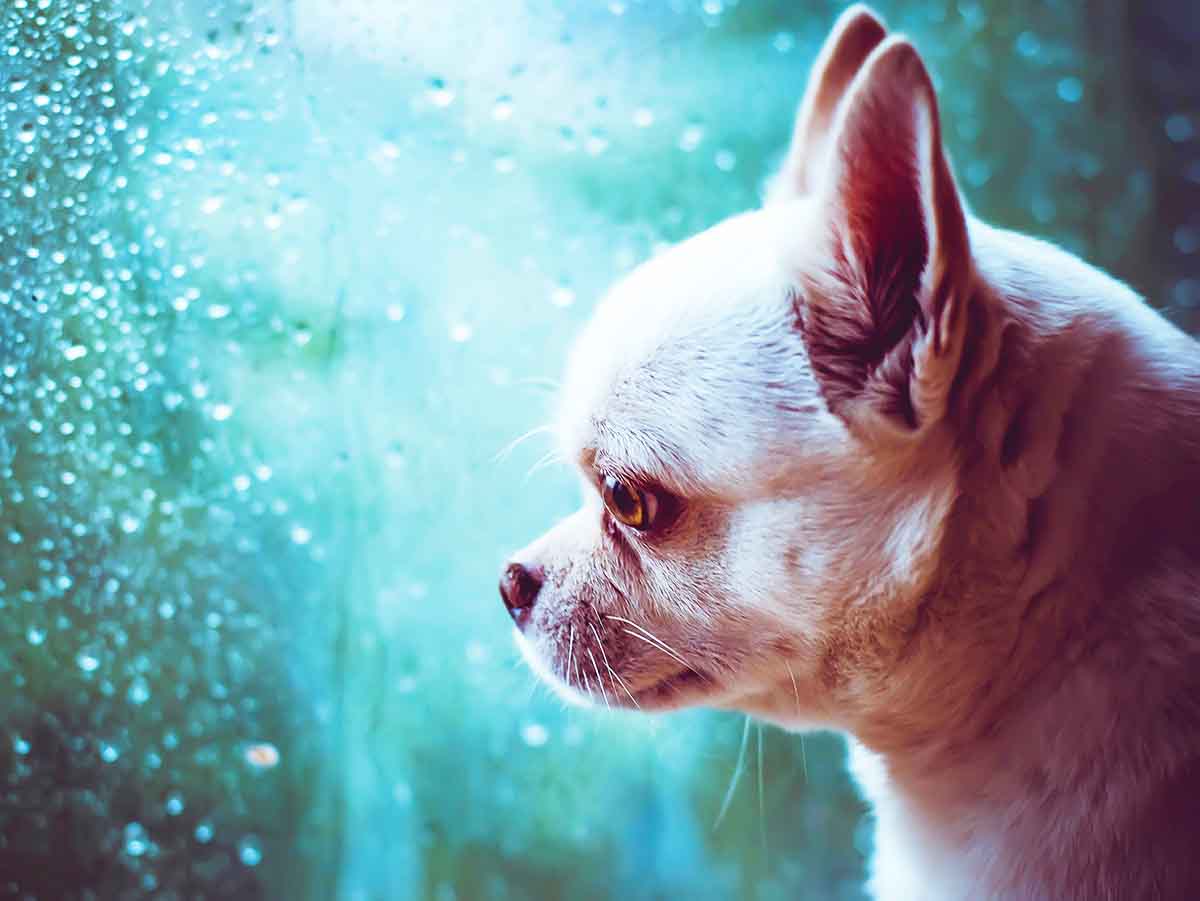
Do Puppies Feel Sad? 9 Situations Explained (+Dos & Don’ts)
Sadness is not an emotion restricted to humans, other animals feel emotions too, and your puppy can be sad.
The trigger for sadness is loss or disappointment, a form of grief or general unhappiness.
What can make your puppy sad?
1. Missing Mommy
The first night you bring your puppy home and leave them to sleep, they may howl as if their heart is breaking. Most new puppy owners experience this reaction, and it is heart-rending.
Your puppy misses the warm comfort of its mommy and siblings; it is natural for it to feel sad.
This sadness is temporary – your puppy forms a bond with you and learns to feel secure and happy in its new home.
It may take several days or weeks, but with patience, the puppy accepts the absence of its mother, and the sadness dissipates.
Helping your puppy to be alone at night eases this adaptation period.
2. Missing Siblings
The link between a puppy and its littermates is not as deep as the link with its mother.
Your puppy will remember its siblings but is unlikely to feel excessively sad at their absence. Your puppy will only continue to recognize its littermates if it has regular playdates with them.
Otherwise, the memory of its brothers and sisters is simply a note in your puppy’s scent files.
3. Moving to a New Home
Perhaps you have adopted your puppy from a friend or family member, and this is your puppy’s third or fourth home?
It is natural for your puppy to be anxious about the changes to its familiar routine and to miss the people and places left behind.
Your puppy may react to the changes by being quieter than usual and with a loss of self-confidence – sadness.
A puppy is very adaptable, and although it may feel sadness at the loss of familiar places and people when rehomed, your puppy will soon form new bonds and associations.
Sadness is always a temporary emotion.
4. Raised Voices and Shouting
Your puppy will respond to your tone of voice and body language.
If you shout at your puppy for knocking something over, your puppy may react with fear (running away with its tail between its legs) or sadness (drooping posture and crouching).
As part of your puppy training, you need to concentrate on commands and actions.
General shouting to express anger is confusing and frightening for your puppy. A shouted “NO” is helpful as a “stop what you are doing command,” providing you use it appropriately.
Raising your voice or shouting may be necessary if the puppy is some distance from you or emphasizing an urgent command.
Rather like shouting at your children, shouting at your puppy is confusing and upsetting.
When you speak to your puppy, pay attention to tone and body language. Your puppy picks up what you feel from your scent and visual cues more than the actual words at this stage.
5. Abandonment Issues
Your puppy may whine or cry when you leave the room because of anxiety and fear of abandonment. Most puppies fear isolation and being alone.
Part of your puppy training is to allow your puppy to be comfortable and happy when no one is around.
Initially, your young puppy is right to worry about being left alone and will be sad. Gradually you can get your puppy to accept that it is safe and secure when on its own, and your puppy will be less unhappy.
Some dogs retain this sense of loss and sadness when left alone during the day or night.
Most puppies with appropriate confidence building outgrow the abandonment issue.
If your puppy howls and whines when left and is still howling and whining when you come back, you may feel terrible and think that your puppy has been sad and sobbing the whole time.
By starting with short periods of alone time in a crate or puppy playpen you can build a tolerance of being alone. Playing a radio or soothing music can also help reduce feelings of isolation.
In practice, your puppy probably had a nice nap and playtime and only restarted the whining and crying when it heard you coming back.
To reassure yourself, you might want to use a web monitoring device so you can check on your puppy while you are away.
6. Attention Seeking
Realistically you can’t play all day with your puppy – sometimes you play, and sometimes you have other tasks.
Your puppy may seem sad when you are not actively playing with it.
The primary cause of this sadness is excess energy – if you regularly schedule energetic play sessions, your puppy will be ready for a nap when you can’t play with it.
Schedule your play and training sessions throughout the day to fit in with your working schedule as part of getting your puppy familiar with the regular rhythm of your family life.
Your puppy will soon adjust to knowing when to play with you and when it is time to amuse itself (or sleep).
7. Teething
When your puppy is teething, it needs to chew and comfort its hot and aching gums.
If your puppy chews inappropriately, you may get angry and shout (making your puppy sad). Your puppy may also feel unhappy at the discomfort.
Teething can last for a couple of months, and to keep your puppy happy and less sad during this time, provide a range of teething aids:
- Hard – puppy teething toys.
- Soft – frozen rope or soft toys.
- Edibles – carrot, chew sticks, and ice cubes.
Puzzle toys like the Kong Puppy toy help to engage your puppy’s brain while providing an appropriate chew toy and treat.
8. Illness or Injury
If your puppy gets stung by a bee, needs worming, or has an upset stomach, then your puppy may express unhappiness.
Sometimes there is an underlying cause of a puppy showing sadness – typically, if your sad puppy remains unhappy when you offer to play, there is probably something wrong.
As you and your puppy grow together, you will learn to spot when your puppy feels unhappy because there is something wrong.
If your puppy is hiding, whining, or not eating, then it’s worth getting your puppy checked out by a vet to rule out a health issue.
9. Feeling Fear
When your puppy tries to hide, shakes and whines, possibly pants too much, and there may be excessive drooling, your puppy is undoubtedly feeling sorry for itself but is probably afraid of something.
The fear trigger may not be obvious, but fearful puppies can look like sad puppies.
You can take steps to help your puppy deal with its fears as part of confidence-building.
How to Recognize a Sad Puppy?
A sad puppy shows many of the same symptoms and behaviors as an ill puppy:
- No enthusiasm for play.
- Curled up and asleep more than usual.
- Not eating or only eating a small amount.
- Hiding away in corners or under furniture.
Normal sadness is temporary and resolved by contact with you, playtime, and access to a few treat foods.
If your puppy is ill rather than feeling a little blue, then your puppy may show other symptoms like:
- Vomiting and diarrhea.
- Panting and drooling.
- Difficulties breathing.
- Shaking.
- Too hot or too cold.
- Pale gums.
If in doubt, get a vet to check your puppy is healthy before assuming that your puppy is sad.
How to Cheer Up a Sad Puppy?
Feeling sad or missing its owner, littermates, mother, or former home is a natural emotion for your puppy, and you don’t need to treat the sadness as an enormous issue.
The best way to cheer up a sad puppy is to focus on:
- Giving the puppy a safe zone.
- Cuddles and positive contact.
- Fun food and treats.
- Interesting toys.
- Physical activities and games.
Your puppy is bound to find a new and unfamiliar home unsettling because it smells different, and your puppy doesn’t know the layout.
Creating a safe zone using a dog crate with a blanket covering creates a den where the puppy can stay safe from unfamiliar surroundings.
When your puppy goes into the safe crate, it is essential that it is not forced to come out and that other animals or children don’t invade the space.
Your puppy needs to know that when it goes (voluntarily) into the crate, it is safe and protected.
It may be frustrating if you want to play with your puppy and it hides in its crate, but be patient and wait for it to come out by itself in search of you, food, and water.
Your puppy needs physical contact to feel as if it is part of the pack. You can achieve this with a puppy massage, grooming, and regular cuddles.
If your puppy is a large breed, it is probably not realistic to encourage it to sleep on your lap because that won’t be practical when it grows.
However, you can sit next to your puppy on the ground so it can snuggle with you, as this is a habit you can carry on through adulthood.
Adult dogs also enjoy a regular hug.
Your puppy needs regular small meals, especially if it is one of the toy breeds.
Treats are part of the daily calorie allowance and are suitable for hand feeding to encourage your puppy to bond with you and other family members.
You don’t want to overfeed your puppy, so it is best to determine how many calories your puppy needs a day from puppy meals and treats and weigh out the daily allowance.
Puppies enjoy different types of toys and games.
Some breeds like to chase a rolling ball or thrown toy, others like to tug, and some like to shake and toss their toys—some puppies like all the games.
You want to provide your puppy with games that teach, entertain, and make your puppy use its brain. An active puppy is a happy puppy with no time to feel sad and blue.
What Shouldn’t You Do with a Sad Puppy?
Imagine the scene – your puppy howls; you rush over, cuddle it, and give it a delicious treat food.
If you are not careful, you can teach your puppy that it gets a cuddle and a treat whenever it howls.
It is natural for your puppy to feel sad in many everyday life situations.
If you make a fuss every time your puppy displays sadness, you may teach your puppy that if it wants your attention, it needs to be sad.
The same way a toddler will soon learn that bursting into tears means mommy hands over the sweets or the toy – if you play that game.
Pay attention to your puppy and encourage it to engage with its toys, games, and regular activities, but avoid creating a link between being sad and getting extra attention.
Summary
Puppies, like humans, can feel all the usual emotions, and that includes sadness.
Sadness in a puppy rarely develops into depression because puppies are young and enthusiastic. Depression in puppies and dogs tends to express an underlying physical health issue rather than an emotional one.
Sadness, like happiness, is an emotion, and part of your puppy’s growth is experiencing emotions as part of everyday life. Provided your puppy is neither ill nor injured, sadness does not require your intervention to remove it.
Like the rain, your puppy’s sadness will pass, the sunshine of happiness will shine if you offer your puppy the chance to explore, play and develop family bonds with you.